Most founders who search “how to sell your app” are looking for a checklist. Step one: get a valuation. Step two: list it somewhere. Step three: wait for offers. That approach works if you want an average exit. This guide covers what actually drives a great one.
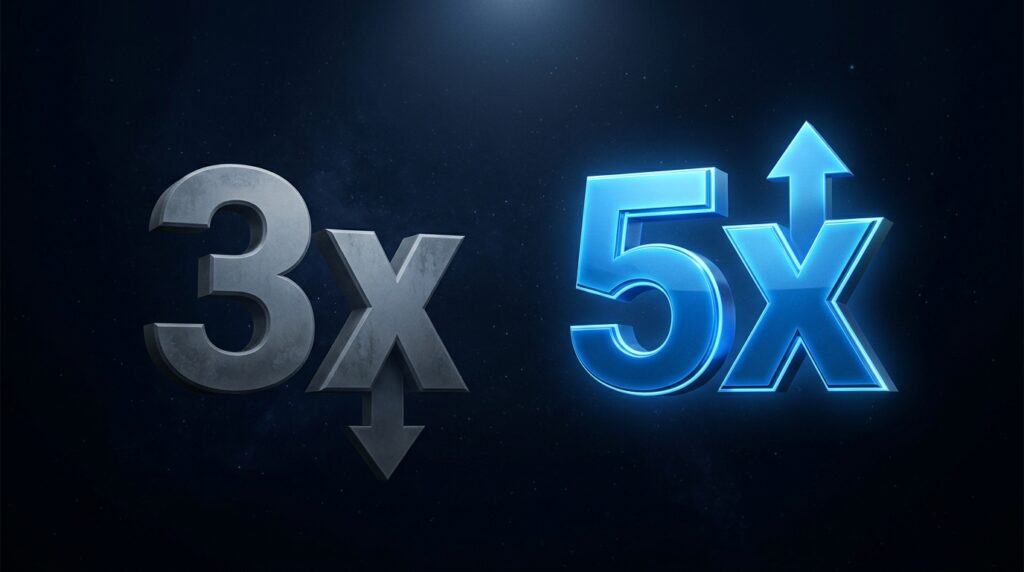
The difference between a 3x and a 5x deal is rarely the app itself. It is the preparation, the process, and the type of buyer you end up in front of. Here is what that looks like in practice.
Get Your Numbers in Order Before You Do Anything Else
Before you start talking to buyers, your financials need to be clean, complete, and easy to hand over.
Most buyers will look at 12 to 24 months of monthly revenue, your net profit, and your seller’s discretionary earnings (SDE). If you cannot produce those numbers in 20 minutes, you are not ready to sell.
What to have ready: monthly revenue broken down by source, MAU and DAU over 12 months, Day-30 retention rate, churn rate, marketing expenses by channel, net profit margin, a clear SDE calculation (stripping out your salary and one-off owner costs), and basic documentation on your tech stack and any third-party dependencies.
Apps with clean books close faster and get better offers. Buyers discount anything they cannot verify quickly. Every day they spend chasing documentation is a day they start wondering what else is missing.
Understand What Your App Is Actually Worth
App valuation in the mobile space is almost always based on a multiple of annual SDE. For most profitable apps, that range is 2x to 5x, and the exact app valuation multiple depends heavily on the buyer.
Where you land in that range depends on several things: revenue consistency (bumpy MRR gets discounted), MAU and DAU trends, Day-30 retention rate, churn rate, marketing spend as a percentage of revenue, and how much the app depends on you personally, and whether the app has strategic value to a specific type of buyer.
A financial buyer will anchor around 2x to 3x on clean cash flow. A strategic buyer who needs your user base or category access can push past 5x. Knowing which type of buyer your app appeals to changes how you position it entirely. This is one of the most overlooked parts of how to sell your app at the top of the range.
Find the Right Buyer, Not Just Any Buyer
The biggest mistake founders make when they decide to sell is sending their app to everyone and waiting to see who bites. Matching an app to the right buyer is exactly what drove our Puff Count exit.
Not every buyer values your app the same way. A portfolio operator looking for yield sees your $18k MRR as a cash flow asset. A SaaS company trying to break into mobile sees your 200k active users as a distribution channel they cannot replicate in two years of building.
The second buyer pays more. Finding them is not luck. It is process.
If you are selling without a broker, build a targeted list of companies or operators who would benefit most from what you have built. The quality of buyers in your process matters far more than the number of offers you collect.
What the Sale Process Actually Looks Like
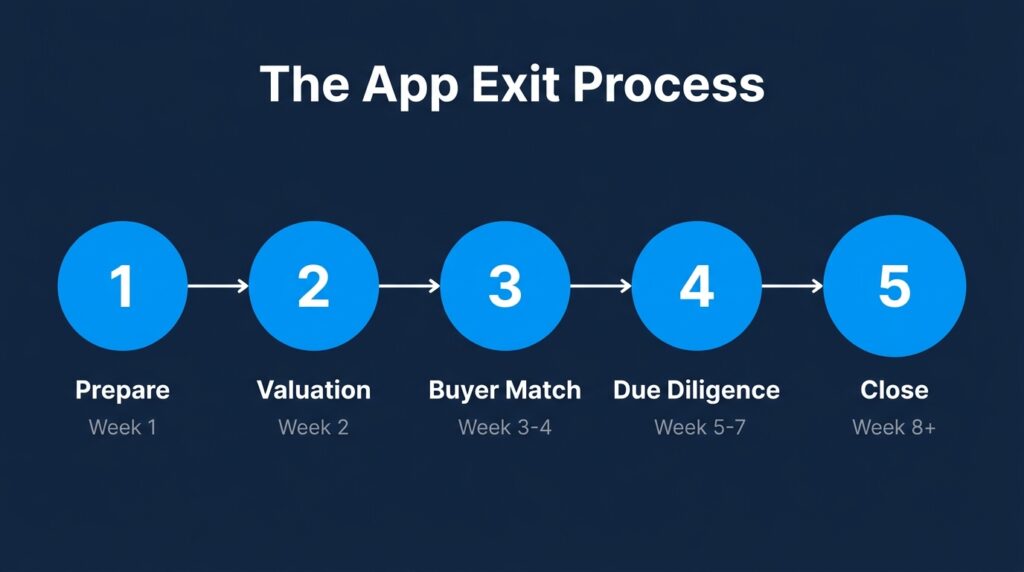
Most off-market mobile app deals follow a similar path: introduction, NDA, data room review, letter of intent, due diligence, and close.
From first serious conversation to wire transfer, expect 60 to 90 days if everything goes smoothly. Deals with unclear ownership, inconsistent revenue, or misaligned expectations on both sides take significantly longer.
The biggest time sink is due diligence. A buyer will want your analytics, payment processor history, codebase access, app store account history, and often a call with key team members. The more prepared you are going in, the faster and cleaner the close.
Mistakes That Kill App Sales
Pricing it wrong. Too high and serious buyers walk away. Too low and you signal something is wrong with the asset. Get a realistic valuation before you approach anyone.
Not having documentation ready. Buyers who have to chase basic information lose confidence fast. The deal does not die in one big moment. It dies in a dozen small frustrations.
Talking to one buyer at a time. Without competition in the process, you have no leverage. Even one other serious buyer at the table changes the dynamic entirely.
Getting emotionally attached to the number. Your asking price is not a reflection of how hard you worked. It reflects what a buyer believes they can make from the asset going forward.
Frequently Asked Questions
When is the right time to sell your app?
The best time is when revenue is stable or growing, your metrics are clean, and documentation is in place. Selling from a position of strength always gets better outcomes than selling out of urgency or burnout.
How long does it take to sell a mobile app?
From first introduction to close, most off-market deals run 60 to 120 days. The part founders underestimate is preparation. Getting your financials, console exports and asset list in order before you start cuts weeks off that timeline.
Do I need a broker to sell my app?
Not always, and plenty of founders sell direct. The question is what it costs you. A single interested buyer has no reason to raise their number. Competing buyers do. If you already have three serious offers and know how to read an LOI, you may not need help. If you have one buyer and no benchmark, you are negotiating blind.
What multiple can I realistically expect?
Financial buyers pay 2x to 4x annual SDE for profitable apps with consistent revenue. Strategic buyers pay more when your app gives them something they cannot build quickly. The buyer type matters as much as the revenue figure.
What documents do buyers ask for?
Twenty-four months of profit and loss, App Store and Google Play console exports, retention cohorts, ad network and subscription revenue reports, and a clean list of every asset that transfers: code repository, developer accounts, trademarks, domains, and third-party contracts. Missing any of these is the most common reason a deal slows down at diligence.
Can I sell my app confidentially?
Yes. Off-market sales run under a mutual NDA before any identifying information is shared. Your users, your competitors, and your team do not need to know the app is for sale. Public marketplace listings work the opposite way, which is a real cost if confidentiality matters to you.
What kills most deals?
Revenue inconsistencies found in due diligence. Exclusivity given to buyers who were never serious. Sellers who set emotional prices the market will not support. All of these are avoidable.
If you are thinking about how to sell your app in the next 6 to 24 months, the best time to start preparing is now. When you are ready, we can help you sell your app.
OEB Digital works with app founders across 40+ countries, off-market only. No public listings. Serious buyers already in the network. Before you start, read about the emotional side of selling your app. Most founders are surprised by what comes up. When you are ready to move, sell your app off-market with a broker.