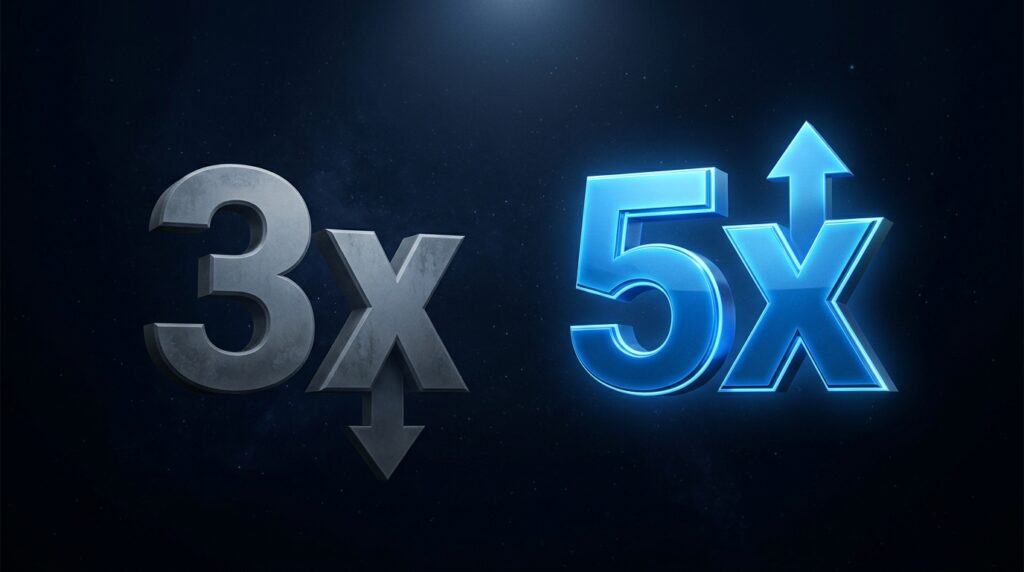
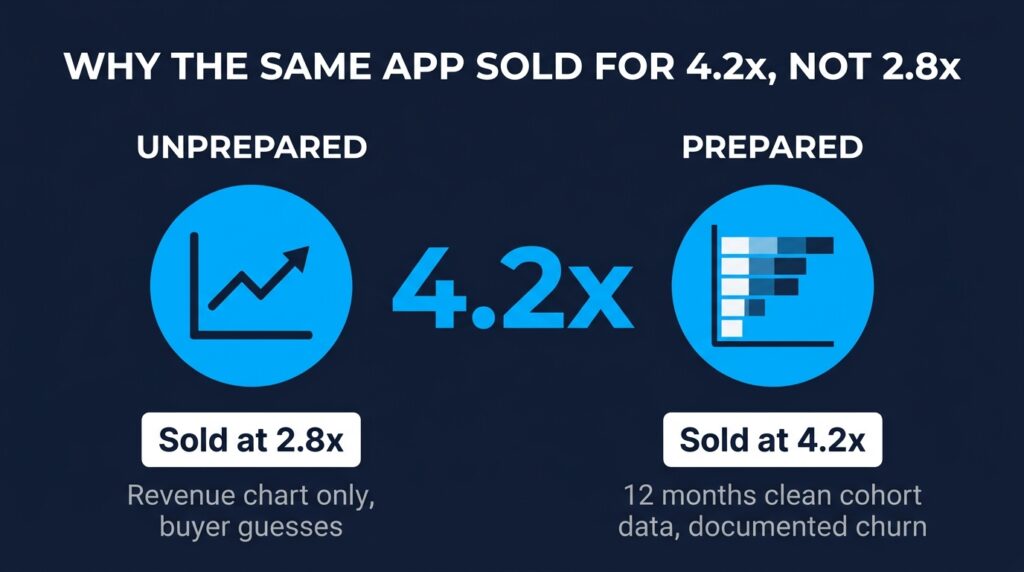
The founder almost listed eight months earlier. If he had, the offers would have come in around 2.8x. Instead he waited, fixed one thing, and sold his app at 4.2x.
The one thing was not his product. It was his data.
This is the story of how to sell a subscription app for a premium multiple in a market where most apps trade under 3x. The app did roughly $35k in monthly recurring revenue. Nothing about the revenue was special. What moved the number was retention he could actually prove.
Why the Market Was Paying 2.8x
In early 2026, the median private software deal closed near 3.1x revenue. Most small mobile apps landed lower, somewhere between 2x and 4.5x SDE depending on age, churn, and platform risk.
Buyers were not short on cash. They were short on trust. Every listing looked the same on the surface: a revenue chart going up and a founder swearing it would keep going.
So buyers discounted. They priced in the risk that the chart would reverse the month after closing. A 2.8x offer was not an insult. It was a hedge against everything the seller could not prove.
What 18% Day-30 Retention Actually Signals
His app held 18% of new users at Day 30. For context, subscription apps average around 14% Day-30 retention, more than double what mostly ad-based apps hold.
That gap matters because retention is the closest thing to a promise about next month’s revenue. A buyer who sees strong Day-30 retention is not betting on a story. He is reading a pattern.
Recurring revenue with low churn is worth more than the same revenue with a leaky funnel. One renews on its own. The other needs constant reacquisition just to stand still. That single fact drives most of any subscription app valuation.
The 8 Months Before the Listing
Here is what the founder did with those eight months. He did not chase a new growth hack. He built the case.
He cleaned up 12 months of cohort data so every retention curve was readable. He documented churn by plan, by channel, and by month. He wrote down how monetization actually worked instead of keeping it in his head.
None of that changed the revenue. It changed what the revenue meant to a buyer. When you can show 12 clean months of cohort retention, you remove the single biggest reason buyers discount.
Most founders do the opposite. They treat preparation as paperwork to handle after a buyer shows interest. By then the discount is already baked in. The work that raises your multiple has to happen before the listing goes out, which is the whole point of preparing your app for sale early.
How to Sell a Subscription App for a Premium Multiple
If you want to sell a subscription app at the top of its range, you are not selling revenue. You are selling certainty. Every point of certainty you hand a buyer is a point you take off their discount.
Three competing offers came in within 10 days of his listing going live. That did not happen because the app was rare. It happened because three buyers could all model the same future and trust it. When buyers compete, the multiple moves toward what the asset is actually worth, not what one cautious buyer will risk.
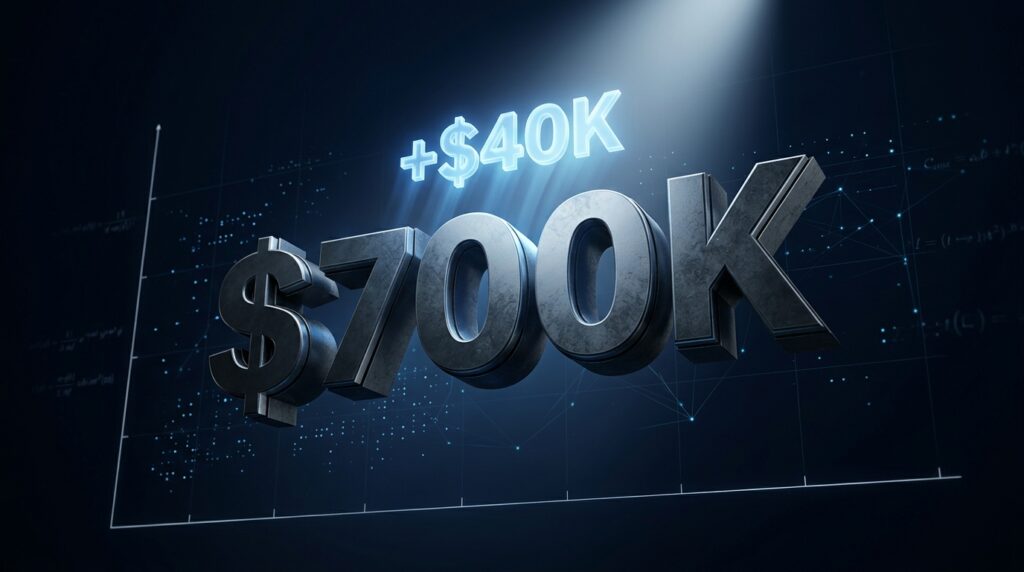
The deal closed at 4.2x. Same revenue a worse-prepared founder would have sold at 2.8x. On a deal this size, the difference between those two numbers is well into six figures.
What You Can Copy Before You List
You do not need a special app to earn a premium multiple. You need to remove doubt before anyone makes an offer.
Start with your retention. Pull your Day-30 and Day-90 numbers by cohort and make them readable. If they are strong, lead with them. If they are weak, that is your real project, not a new feature. Ignoring retention is what cost another founder $750k at the table.
Then document everything a buyer would otherwise take on faith: how monetization works, where users come from, what churn looks like by plan. Put it in writing before you list, not after.
And protect the close. Use a neutral third party like escrow to hold funds until both sides meet their terms, so a clean deal does not fall apart at the finish line.
What Buyers Will Test in Your Cohort Data
Buyers do not take a retention number at face value. They pull it apart.
Expect them to check whether your Day-30 number holds across recent cohorts or rests on one lucky month. Expect them to separate trial users from paid renewals, because high trial retention with weak paid conversion tells a very different story. Expect them to map churn against your ad spend, since a number that only survives on heavy reacquisition is not real retention.
The founder who sold at 4.2x had answers ready for all three. His cohorts were consistent, his paid conversion was documented, and his churn held steady even when he cut spend. That consistency is what turns a strong number into a believable one.
Subscription App Exits: Quick Answers
What multiple can you sell a subscription app for? Most mobile apps trade between 2x and 4.5x SDE. Subscription apps with low churn and clean cohort data sit at the top of that range, and well-prepared listings can clear it.
What raises the multiple the most? Provable retention. Twelve months of clean cohort data, documented churn, and monetization a buyer can run without you do more for your number than any last-minute feature.
The Real Difference
The founder who sold at 4.2x was not a better builder than the one who would have sold at 2.8x. He just refused to let a buyer guess.
If you are deciding when to sell your subscription app, the work that raises your number starts months before the listing. That is the part most founders skip, and it is the part we build with every seller before we take an app to market.
Prove your retention. Document your business. That is how you sell a subscription app for what it is actually worth, instead of what a nervous buyer will risk.