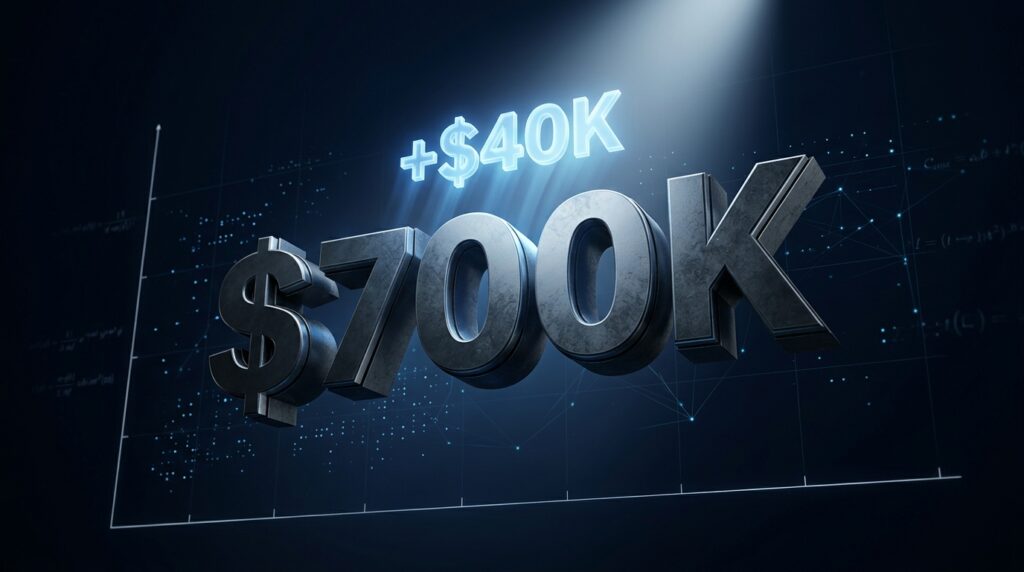
A buyer I know almost wired $220k to buy a mobile app that was supposedly doing $18k a month. On paper it looked clean. Six months of steady growth, strong reviews, a niche with no obvious competitor.
Then he asked for one thing before signing: screen-share access to App Store Connect. The seller went quiet for four days. When the real numbers finally showed up, monthly revenue was closer to $11k. The rest was a promo spike that had already ended.
That four-day silence saved him roughly $80k. Knowing how to buy a mobile app starts with due diligence, and due diligence starts before you ever agree on a price. It is not paperwork. It is the difference between buying a business and buying a story.
Here is the checklist serious buyers run before they wire a dollar.
Start With the Numbers, Not the Pitch
Every seller has a narrative. Your job is to verify it against raw data.
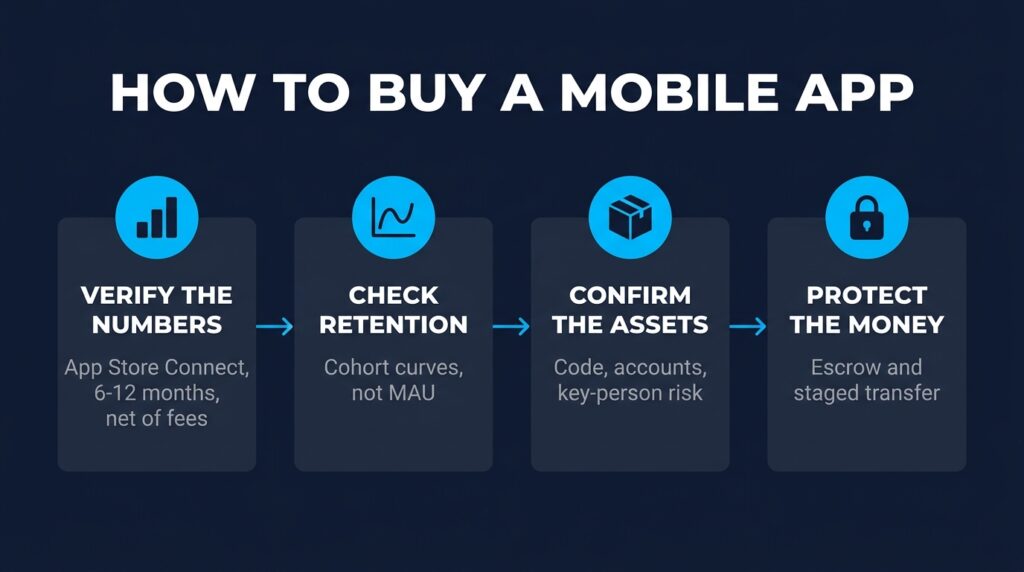
Ask for read or screen-share access to App Store Connect and Google Play Console, then pull 6 to 12 months of history. A single strong month means nothing. A trend line means everything.
Learn where the real money shows up. In App Store Connect, read Proceeds, not Sales. Sales is the gross number sellers like to quote. Proceeds is what actually lands after Apple’s 15% to 30% cut, and it is the figure that ties to the bank.
Then cross-check it against Payments and Financial Reports, which show what Apple actually paid out each month. Do the same on Google Play: compare the estimated sales in the reports against the real Payout reports. If the payouts do not match the pitch, you have your answer.
While you are in there, pull the geography. Both consoles break installs and revenue down by country. An app earning most of its money from one territory, or from a single acquisition channel, is a concentration risk you inherit on day one.
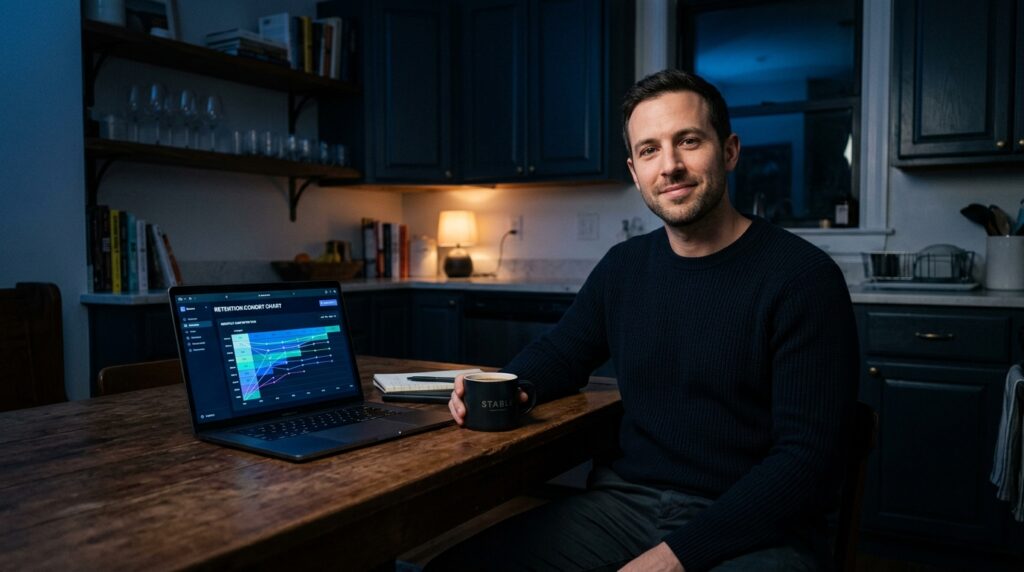
Check retention and active devices in the same place. Apple’s App Analytics and Google’s Statistics page both show active users, installs versus uninstalls, and retention curves you can hold against the seller’s story.
Watch for spikes. A feature placement, a paid campaign, or a one-time promo can inflate a month and then vanish. If the last 90 days look nothing like the 9 months before them, ask why.
If the seller resists giving you direct access to these dashboards, treat that as data. Real numbers survive scrutiny.
How to Buy a Mobile App Without Inheriting Dead Users
Revenue tells you what happened. Retention tells you what happens next.
The typical mobile app loses 70% to 80% of its users within 30 days of install, and more than 95% within 90 days. Cross-vertical Day 30 retention sits around 5% to 7%, with anything above 8% putting an app in the top quartile.
So an app with a big MRR number and a 3% Day 30 curve is a leaking bucket. It survives on new installs, not loyal users. The day you stop feeding it ad spend, revenue follows the retention curve down.
Ask for cohort retention, not monthly active users. MAU hides churn behind fresh acquisition. Cohort curves show you whether users stay. This is the same trap that cost one founder $750k on a $30k MRR app with 3% retention, and it works in reverse when you are the buyer.
If you are looking at a subscription app, dig into the funnel. Healthy subscription apps convert 15% to 30% of installs into trials and 40% to 65% of trials into paying users. Weak conversion at either step means you are buying a churn problem wrapped in a good month.
Check What You Are Actually Buying
A price gets agreed on the business. A deal closes on the assets. Those are not the same thing.
List every asset before you sign, then confirm each one transfers: source code, design files, domains, backend infrastructure, developer accounts, ad network accounts, and any third-party SDKs or API keys the app depends on. An app that quietly relies on the seller’s personal ad account or a hardcoded key is a problem you inherit.
Read the reviews yourself, and start at 3 and 4 stars. Five-star reviews are cheerleading. One-star reviews are often noise. The middle is where real users tell you what is broken, what is missing, and what the next owner will have to fix.
Then ask the hardest question: does this app run without the founder? If every ad relationship, every monetization decision, and every undocumented process lives in the seller’s head, you are not buying a business. You are buying a second job. Key person risk is the quietest deal-killer in app M&A, and it is your job to surface it before closing, not after.
Protect the Money Until Everything Clears
You have verified the numbers, the retention, and the assets. Now protect yourself on the way out.
Put every claim into the purchase agreement as a representation or warranty, with clear terms for what happens if a claim turns out to be false. Verbal promises do not survive a dispute.
Never send funds directly. Use an escrow service to hold the money until every asset transfer is verified complete. Escrow protects both sides and removes the single largest risk in a private deal: paying before you receive.
Structure the transfer in stages where it makes sense. Release funds as source code, accounts, and store ownership actually move, not on a promise that they will. The seller who has real assets will not object to proving it.
Frequently Asked Questions
How long does app due diligence take?
Most private app deals run 2 to 8 weeks from offer to close, and due diligence is the longest stretch. Rushing it is exactly how buyers miss inflated revenue and hidden churn, so build in time to verify every number.
What financials should you check first?
Start with 6 to 12 months of revenue pulled straight from App Store Connect or Google Play Console, net of platform fees and refunds. Then check cohort retention, because revenue without retention is a number with an expiry date.
Do you need escrow to buy a mobile app?
Yes. Escrow holds the funds until every asset actually transfers, which removes the biggest risk in a private deal: paying before you receive what you paid for.
The Deals That Go Wrong Are the Ones Nobody Checked
The best acquisitions are boring. Nothing surprises you after closing because you found it before.
Most first-time buyers overpay not because they picked a bad app, but because they trusted a narrative instead of verifying it. Learning how to buy a mobile app the right way is mostly learning where sellers round up, and asking for the raw data every time.
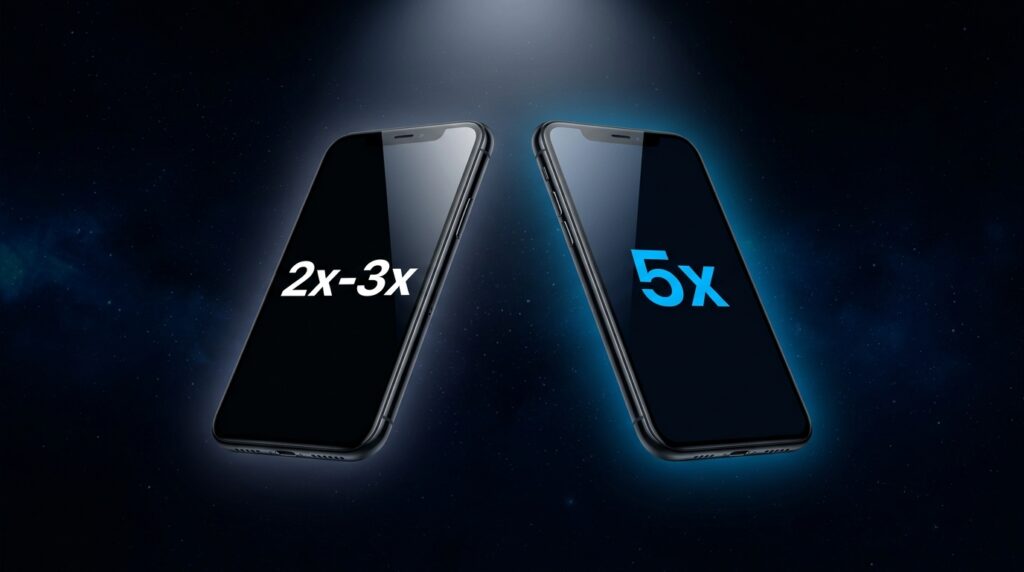
If you want to see deals that are already verified before they reach you, that is the entire point of buying off-market through a broker. The financials are checked, the retention is real, and the seller is serious. And if you want to understand why two buyers can look at the same app and value it $180k apart, read how app valuation multiples depend on who is buying.
Verify first. Wire second. In that order, every time.