The entire hypercasual segment generates under half a billion dollars in in-app purchase revenue. Midcore is $31 billion. Casual is $22 billion. That one comparison explains most of what happens when an ad-driven game goes to market.
If you own a live hyper-casual or hybrid-casual game and you are working out what it will sell for, forget the 4x you saw on someone else’s subscription exit. The hyper casual game valuation multiple you should plan around is roughly half that. Not because your game is worse. Because ad revenue behaves differently, and buyers price behavior. Here is the real range, what moves it, and what the buyer is solving for.
What a Hyper Casual Game Valuation Multiple Actually Looks Like
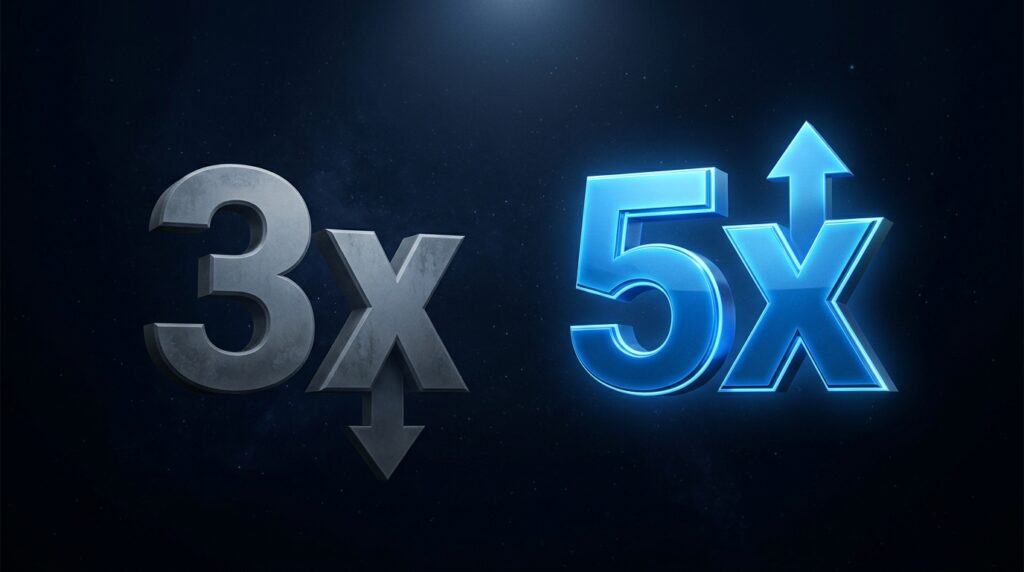
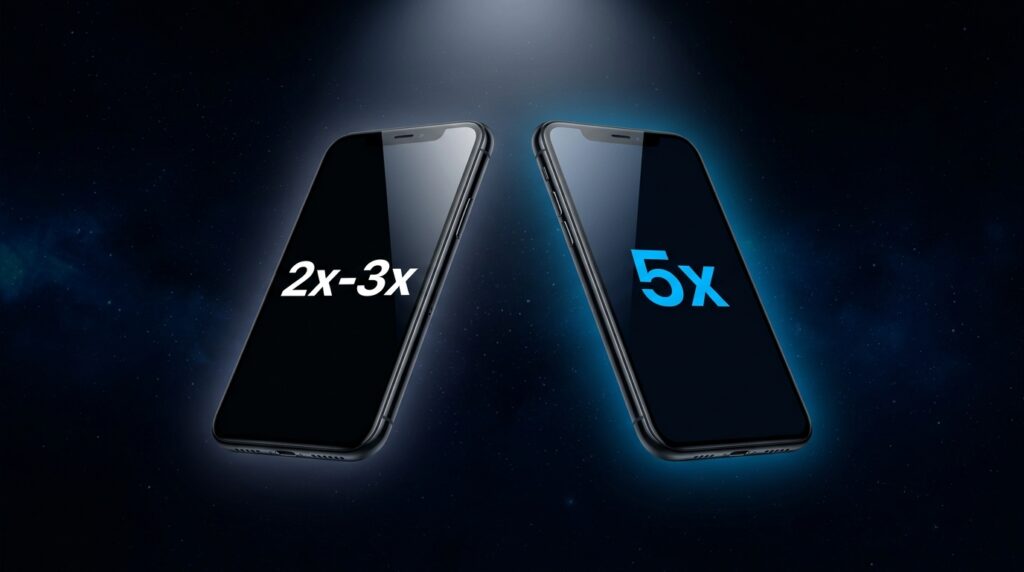
Mobile apps and games in our range close between 2x and 5x SDE, seller’s discretionary earnings annualized over the trailing twelve months. Hyper-casual sits at the floor of that band, and often under it.
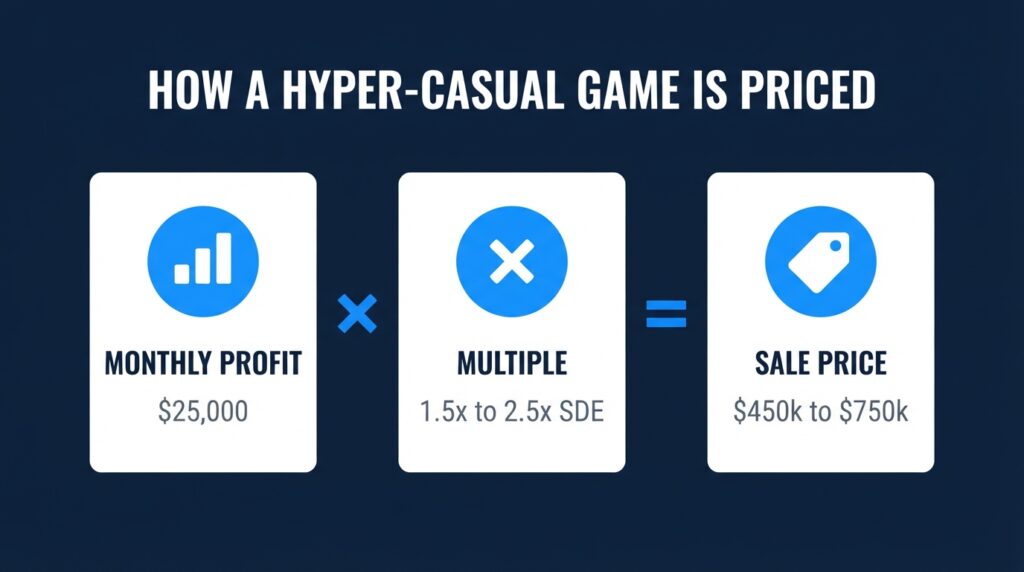
Most pure ad-driven games close between 1.5x and 2.5x. A hybrid-casual title with in-app purchase revenue on top of ads and Day 30 retention above 5% can push past 3x. Getting to 3.5x on ad revenue alone is rare, and it usually means a strategic buyer wants the audience rather than the P&L.
Run the math on a game earning $25k a month in profit. At 2x that is $600k. At 3.5x it is $1.05M. The $450k difference is not a negotiation gap. It is a risk gap, decided before a buyer ever sends an offer. The framework is the same one in our mobile app valuation breakdown, but the inputs are weighted differently for an ad-driven asset.
Why Buyers Discount Ad Revenue
You do not set your own prices. eCPM is set by ad networks and advertiser demand. Azur Games data shows eCPM climbing since the start of 2025, which is good news for sellers right now. It also proves the point. That number moves without you touching a line of code, so it can move the other way.
The top of the chart is closed. More than half of the current top 300 games by installs were released before 2024. New releases made up 2% of that chart this year, down from 8% in mid-2023. Replacing your install volume is harder than it was when you launched, and buyers know it.
Concentration is a single point of failure. If most of your revenue comes from one ad network, one geo, or one platform, the buyer prices the day that source changes its terms. It will, and it comes out of your multiple.
Four Things That Move a Hyper Casual Game Valuation Multiple Up
1. Day 30 retention above 5%. Every successful hypercasual title of the past year shares a D30 target of at least 5%, with the strongest reaching 7.5%. Below 3% you are not selling a game, you are selling a traffic flip, and buyers price it that way.
2. In-app purchase revenue alongside ads. Hybrid monetization is the biggest single lever between a 1.5x and a 3x. IAP revenue is repeatable and tied to your product decisions, not advertiser budgets. Roughly 70% of the current hypercasual top chart is games that launched or scaled in 2025 on this model.
3. Network and geo spread. Three ad networks beat one. Revenue across tier-one and tier-two geos beats a single market. Cheapest fix on the list, and the one founders skip most.
4. Organic install share. If your installs are entirely paid, the buyer is buying your user acquisition spend, not your game. Organic App Store search downloads are the closest thing to a moat a hyper-casual title has. We broke down how these levers compound in how to increase an app valuation multiple.
The Buyer Set Is Different, So the Timeline Is Different
Nobody buys a hyper-casual game to run it as a lifestyle business. The buyers are portfolio operators, publishers, and ad-arbitrage specialists who already own eight or twenty titles and a user acquisition team that costs nothing extra to point at yours.
That changes two things. They diligence fast, because they have priced this asset type before. And they pay less, because they are buying a slot in a portfolio, not a standalone business.
The upside is speed. Games M&A hit $2.3 billion across 54 transactions in Q2 2026, the highest deal count since 2022. Deals in this range move from first call to funds in escrow in weeks, not months. Contrast that with the subscription app we took to a 4.2x exit, where the retention story took months to build before listing.
Lower multiple, faster close, fewer contingencies. That tradeoff is what sets the hyper casual game valuation multiple, and it is not a bad deal if you understand it going in.
What to Fix Before You List
Start with twelve months of clean revenue reporting, split by ad network and platform. A buyer who has to rebuild your P&L from four dashboards discounts for the effort.
Pull cohort retention curves for the last six months, not a lifetime average. Lifetime averages hide decline, every experienced buyer knows it, and showing one costs you credibility on the first call.
Separate your salary and contractor costs out of the P&L. SDE is the profit a buyer inherits, and buyers add back what leaves with you. Founders routinely understate their own hyper casual game valuation multiple by burying personal costs in operating expenses.
Then decide whether you sell now or in six months. eCPM is rising, mobile downloads are falling, and buyers with cash are competing for fewer quality assets. Waiting is a bet that your retention improves faster than your installs decay. Run the numbers first, and if you want a read on where your game sits, get a valuation on your app or game before you commit either way.
Frequently Asked Questions
What multiple do hyper-casual games sell for?
A typical hyper casual game valuation multiple lands between 1.5x and 2.5x SDE on trailing twelve month earnings. Hybrid-casual titles with in-app purchase revenue and Day 30 retention above 5% reach 3x or higher. The multiple applies to annual profit, not revenue.
Why do subscription apps get higher multiples than ad-driven games?
Subscription revenue is contracted and predictable, while ad revenue is set by networks the seller does not control. A buyer can forecast a subscription base twelve months out. Forecasting eCPM and install volume carries far more risk, and that risk comes off the multiple.
Can I sell a hyper-casual game with declining downloads?
Yes, and most hyper-casual games that sell are past their install peak. What matters is whether revenue is stable and the decline is predictable. Flat revenue with falling installs tells a buyer your retained players monetize better, which beats rising installs with falling revenue.
How long does it take to sell a hyper-casual game?
Typically four to eight weeks from listing to close, faster than most app categories, because buyers here are repeat acquirers with a known diligence checklist. Funds move through a third-party service such as escrow.com or a dedicated M&A escrow agent, depending on deal size.
Is now a good time to sell a hyper-casual game?
Conditions are favorable. eCPM has been rising since early 2025, games M&A deal count is at a four-year high, and portfolio buyers are actively acquiring. The counterweight is that mobile installs keep falling, so the asset gets harder to grow every quarter you hold it. For more, see our breakdown of mobile game acquisition trends.