You own an app that already makes money, and now you are deciding where to sell it. The Flippa vs a broker question almost always starts with fees, because the fee is the only number both options publish up front. It is also the least important number in the decision.
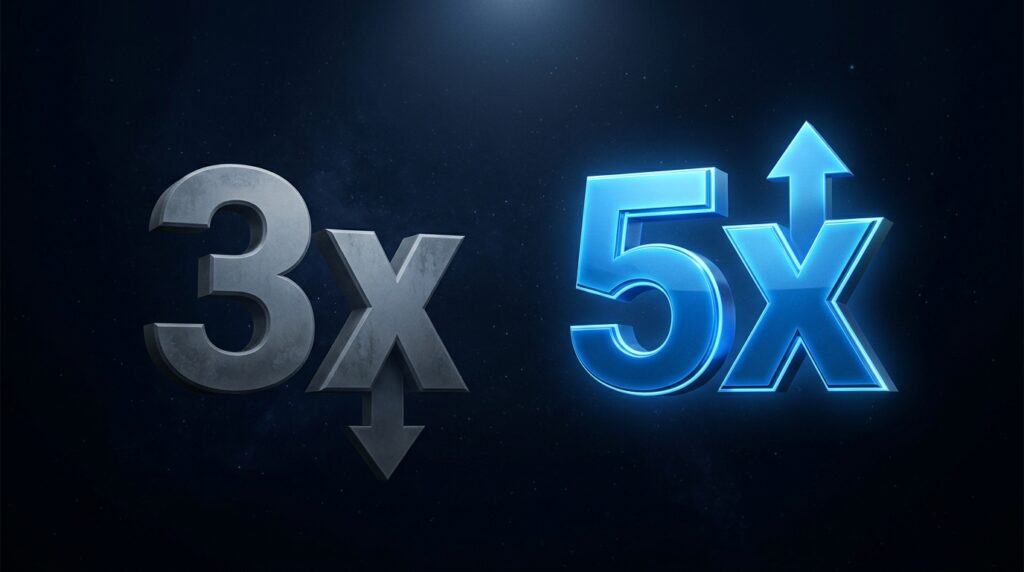
Here is the math most founders never run. Selling a $1,000,000 app on a public marketplace costs about $50,000 in fees. Through a broker it is a little over double that, so call the gap $65,000. Now the other number. A buyer pool that tops out at $1,000,000 on an app a strategic acquirer would have paid $1,200,000 for costs you $200,000. The price gap is three times the fee gap, and only one of the two arrives as an invoice.
What Flippa charges to sell an app: listing and success fees
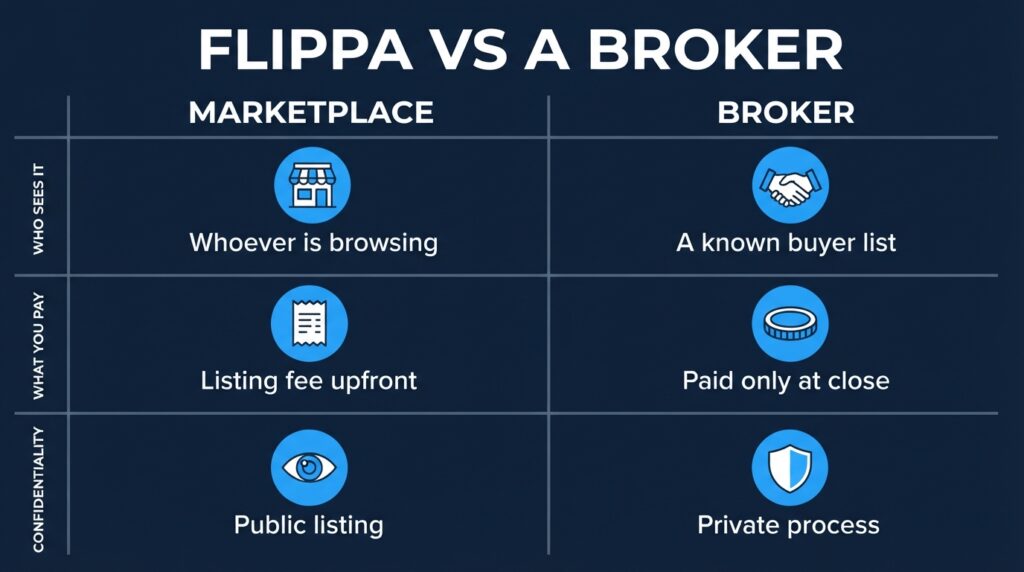
Flippa charges you before it charges you anything else. Packages run $29 for a 60-day entry listing, $49 for a three-month boosted listing, and $199 for six months with NDA protection included, according to Flippa’s published pricing. On the two cheaper tiers, NDA and confidentiality is a separate $199 add-on.
The fees are not refundable whether or not your app sells.
The success fee sits on top and is tiered by sale price, starting around 10% on smaller sales and stepping down toward 5% on larger ones. Check the current tiers before you list, because they change. Closing adds a little more on top: Flippa lists FlippaPay from 1% and Escrow.com from 1.2% for the payment itself.
Run it on a $1,000,000 sale through a six-month premium listing and you land near $50,200 in total platform cost. That is real money, and it is genuinely cheaper than a broker, which costs a little over double at that size. Anyone who tells you the marketplace is expensive is selling something.
Flippa vs a broker: the number that actually moves
A public marketplace runs on inbound. You list, and whoever happens to be browsing that week sees your app. Volume is high and buyer quality is mixed. You will field questions from first-time acquirers and people who ask for your revenue screenshots and then go quiet.
An off-market process works the other direction. Your app goes to a known list of active acquirers, several at the same time, and the ones who engage are already hunting in your category. That is the process we walk through step by step in how to sell your app and nail your exit.
That difference shows up in the offer, because buyers price your app differently. Financial buyers price cash flow and land around 2x to 4x seller’s discretionary earnings. Strategic buyers price what your app gives them that they cannot build quickly, and they routinely pay above the band to get it. We broke down all three buyer types in our guide to who is buying mobile apps in 2026.
What you are paying a broker for
In the Flippa vs a broker comparison, the fee does not buy you a listing page. It buys you a process where several buyer conversations run at once, so no single buyer controls your timeline.
It also buys someone to hold the line during due diligence. Late-stage repricing is the most common way app deals lose value, and the request arrives when the seller is tired and committed to closing. Our walkthrough of why founders use a broker for a mobile exit covers what that looks like.
And it buys deal structure. Payment timing, holdbacks, transition terms, and who carries the risk on a platform account transfer are worth more than a point of commission. On either path, move the money through a neutral third party like Escrow.com.
For context: OEB Digital has closed over $20M in app and game deals across 40+ countries, on assets earning $5K to $500K a month, at multiples between 2x and 5x.
When Flippa is the right call
List publicly if your app earns under roughly $2,000 a month in net profit, if you do not have 12 clean months of financials yet, or if speed matters more than the last 20% of price. Most brokers will not take that asset anyway. Empire Flippers, for example, requires at least $2,000 in monthly net profit and 12 months of trading history. Flippa has no such floor.
The same applies if you want to run the sale yourself. If you can answer diligence questions, verify a buyer, and hold your own in a negotiation, a $199 listing is a bargain against any percentage of your sale price.
When a broker earns the fee
The Flippa vs a broker math flips once your app clears about $5,000 a month in profit and has a year of clean numbers behind it. At that point real acquirers are interested, and real acquirers respond to competition.
Confidentiality is the other trigger. A public listing tells your competitors, your contractors, and sometimes your users that the app is for sale. In a category where two or three rivals track the same keywords, that is information you are giving away for free.
Three questions to answer before you list
First: would at least three serious buyers compete for this app? If yes, a process that runs them in parallel is worth more than the fee it costs.
Second: can you carry eight weeks of due diligence without your numbers slipping? A 10% revenue dip on a $1,000,000 deal knocks six figures off your price, which is more than the entire gap in fees between the two routes.
Third: does anyone gain strategically from owning your app? If a competitor or publisher would move faster because of your user base or your keyword position, you need a process that puts the app in front of them directly.
Two yeses and the Flippa vs a broker question answers itself. If you want an honest read on which side your app falls, tell us about your app and we will give you the number before you decide anything.
Frequently asked questions about Flippa vs a broker
Is Flippa or a broker better for selling a mobile app?
Flippa is better for apps under roughly $2,000 a month in profit, and a broker is better above about $5,000 a month. The dividing line is whether serious acquirers would compete for your app.
How much does Flippa charge to sell an app?
A non-refundable listing fee of $29 to $199 depending on the package, plus a tiered success fee that starts near 10% on small sales and steps down toward 5% on larger ones. NDA protection costs an extra $199 unless you take the premium listing.
Do app brokers charge upfront fees?
Some do and some do not. Retainer models charge monthly whether or not the app sells, while success-fee models only get paid at close. Success fees on app deals typically run in the low double digits as a percentage and step down as the deal size rises. OEB Digital charges nothing upfront. Ask which model you are signing before you sign anything.
Can I list on Flippa and use a broker at the same time?
Usually not, and you would not want to. Most brokerage agreements are exclusive, and a live public listing undercuts an off-market process by showing buyers your asking price before any conversation starts.
Will listing my app publicly hurt my business?
It can. Competitors learn your app is for sale and see your revenue claims, and a listing that sits unsold for six months tells later buyers the market already passed on it.