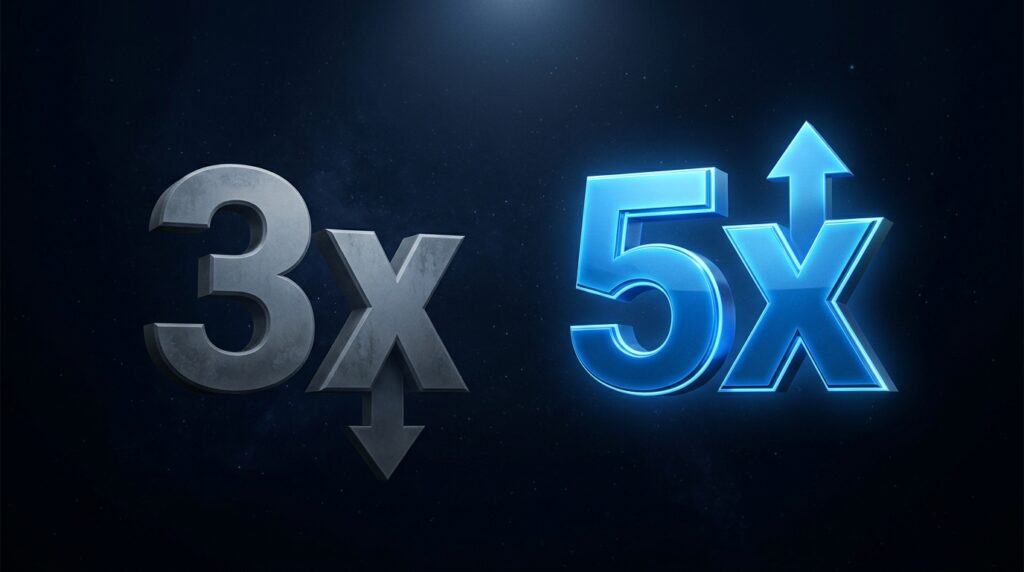
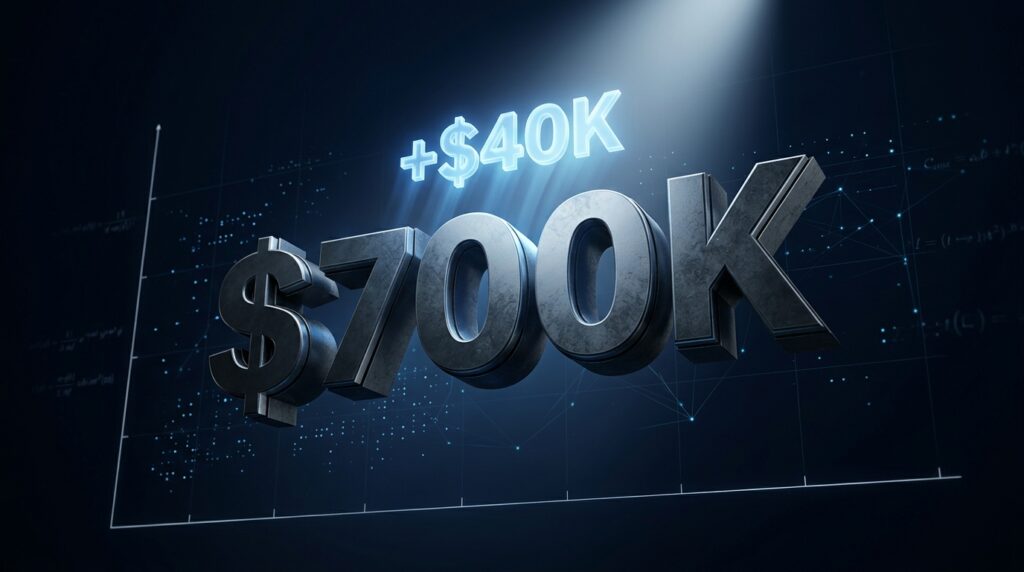
A founder came to us this year with a subscription app doing $41,000 a month in profit. He had already run the math himself: 4x, call it $2M. The market at the time was paying closer to 2.8x for apps that looked like his.
That gap was not a negotiation problem. It was twelve months of cohort data he had never opened.
If you already own a live subscription app and you are trying to work out what it sells for, the subscription app valuation multiple you end up with is decided months before a buyer ever sees your P&L. Here is the band these assets actually trade in, and the specific things that move you inside it.
What Subscription App Valuation Multiple Should You Expect in 2026?
Most subscription apps sell between 2x and 4.5x annual SDE, or seller’s discretionary earnings. That is the working subscription app valuation multiple range across the deals we see and the deals that get reported publicly.
Subscription apps sit at the top of that band more often than any other monetization model. Ad-driven and one-time-purchase apps usually land between 1.5x and 3x. The difference is not buyer preference. It is that a subscriber base produces a forecastable revenue curve and an ad-driven install base produces an estimate.
Above 4.5x you are in strategic buyer territory, where someone is paying for your subscriber list and category position rather than your cash flow. That is a different sale process with a much smaller buyer pool. Our mobile app valuation guide covers how the SDE math works across every app type.
Why Buyers Pay a Premium for Recurring Revenue
A buyer’s model runs on one question: what does this asset earn in month 13 without you in it?
Subscription revenue answers that with a cohort curve. Ad revenue answers it with a hope. That is the entire premium, and it is worth roughly a full turn of the multiple. It is also why a subscription app valuation multiple starts higher than the rest of the market before a single metric is checked.
But the premium is conditional. Buyers in 2026 underwrite durability before growth: retention, margin, and channel concentration. Recurring revenue that churns hard is not recurring revenue, and diligence finds that out in about a week.
The Retention Number That Decides Your Subscription App Valuation Multiple
Here is the benchmark most sellers have never checked.
According to RevenueCat’s State of Subscription Apps 2026, built from 115,000 apps and $16 billion in revenue, roughly 72% of annual subscribers cancel inside year one. That is worse than the 56% recorded a year earlier. And 35% of all annual cancellations happen in the first month alone.
Buyers know these numbers. When they open your cohort data, they are checking one thing: does your app hold subscribers better or worse than the category?
Better, and your multiple moves up. Worse, and every dollar of revenue in your P&L gets discounted, because the buyer is modeling a decline you have not modeled yourself. We watched that exact scenario cost one founder $750k when the retention metrics surfaced mid-diligence.
What Moved One App From 2.8x to 4.2x
The subscription app we closed at 4.2x while comparable deals were trading at 2.8x was not a better product. It was a better-prepared one, and preparation is the only lever that reliably moves a subscription app valuation multiple.
Three things did it:
- Day 30 retention at 18%, documented across twelve months of clean cohorts, not a single dashboard screenshot.
- Revenue split across three acquisition channels, so no single channel failure could take out the P&L.
- Eight months of preparation before the listing went out, which meant every question a buyer asked already had a document behind it.
Three competing offers landed within ten days. Competition, not persuasion, is what closes the distance between the bottom and the top of the band. The full breakdown of that deal is in our 4.2x subscription app exit case study. If you are planning the same process for your own app, start with how to sell your app.
Where Sellers Lose a Full Turn of the Multiple
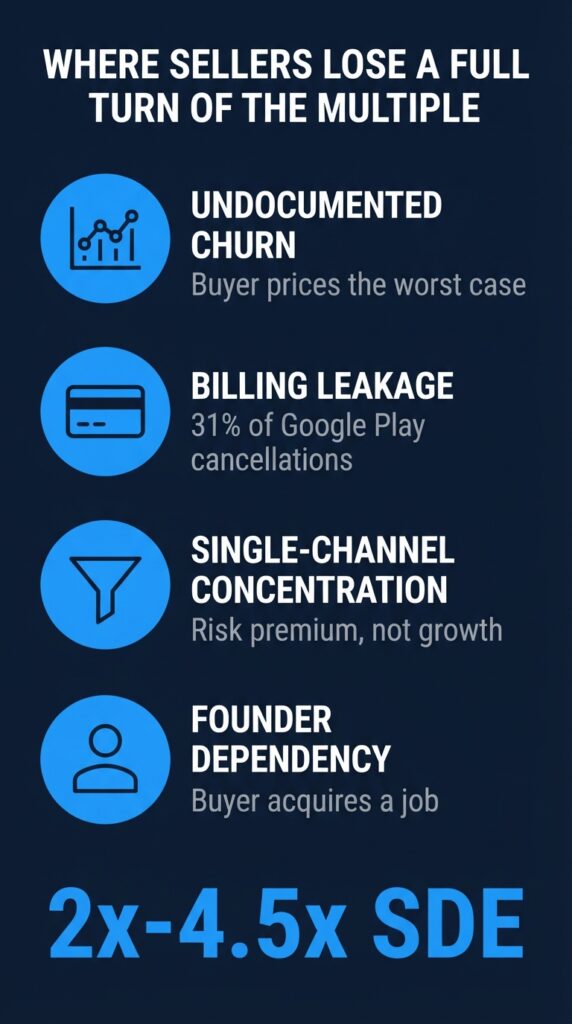
Four things reliably drag a subscription app valuation multiple to the bottom of the range.
Undocumented churn. If you cannot produce monthly cohort retention for the last twelve months, the buyer assumes the worst case and prices it in. Silence is never read as good news.
Billing leakage. On Google Play, 31% of subscription cancellations are involuntary billing failures, against 14% on the App Store, per Business of Apps churn data. That is recoverable revenue sitting in your retry logic. A buyer who spots it will price your app on the lower number while planning to capture the higher one.
Single-channel concentration. One paid channel carrying 70% of installs is a risk premium, not a growth story.
Founder dependency. If the app needs you weekly, the buyer is acquiring a job rather than an asset. Reducing that before you list is the highest-return work available to you, and it is covered in detail in our guide to preparing your app for sale.
None of these need capital to fix. They need time, which is why the work has to start before you decide to sell.
What to Do Before You List
Pull twelve months of cohort retention and read it honestly. Split your revenue by channel and know your concentration number. Document everything a stranger would need to run the app for 90 days without calling you.
Then get a real valuation baseline before you build expectations around a figure in your head.
A subscription app valuation multiple is not a fixed property of your asset. It is a measure of how much risk a buyer has to price in, and most of that risk is documentation you have not written yet.
If you own a subscription app and want a data-backed read on what it is worth in today’s market, we can walk you through the numbers.
Frequently Asked Questions
What is a typical subscription app valuation multiple?
A typical subscription app valuation multiple sits between 2x and 4.5x annual SDE. Apps with documented retention, diversified acquisition channels and low founder dependency sit at the top of that band, while ad-driven and one-time-purchase apps typically trade lower, between 1.5x and 3x.
Do subscription apps sell for more than ad-supported apps?
Yes, usually by close to a full turn of the multiple. Recurring revenue is forecastable and ad revenue is not, so a buyer can underwrite a subscription P&L with more confidence. The premium only holds if your churn is documented and reasonable for your category.
How much does churn affect what my app sells for?
Churn is the single biggest input into a subscription app’s multiple. Buyers compare your cohort retention against category benchmarks, and roughly 72% of annual subscribers cancel within the first year across the market. Retention above that benchmark pushes your multiple up. Below it, buyers discount your current revenue because they are modeling decline.
Is MRR or SDE used to value a subscription app?
Most mobile app deals under $5M are priced on annual SDE rather than MRR. Some buyers cross-check with an MRR multiple, typically 24x to 48x monthly recurring revenue, but SDE anchors the offer because it accounts for the real cost of running the app.
How long does it take to improve my multiple before selling?
Six to twelve months is realistic. Retention improvements need time to appear in cohort data and channel diversification takes at least two quarters to prove. Documentation can be finished faster, but the metrics that actually move a multiple need history behind them.