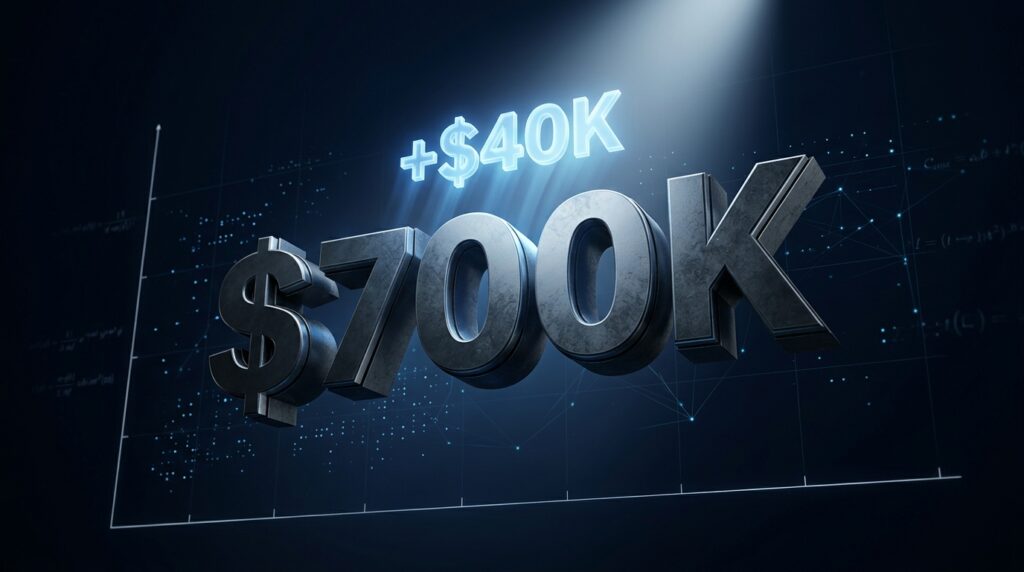
A founder had $600k on the table in March. He turned it down. He wanted $750k, the app was growing, and he figured another quarter of numbers would get him there.
Two months later he signed at $400k.
Nothing broke. No ban, no bug, no lawsuit, no competitor launching a clone. The app was still profitable the day he closed. The question of when to sell your app is almost never a question about your app. It is a question about the window, and windows in mobile close faster than founders expect.
Your App Sits on an Algorithm, Not on Land
Founders price their apps with real estate logic. A house holds value. If the market is soft this year, you wait, you rent it out, you sell in three years for more.
An app does not work like that. It sits on top of two ranking systems you do not control, a retention curve that decays by default, and a buyer pool whose appetite changes every quarter.
The retention math alone should end the real estate comparison. The average iOS app keeps 25.4% of its users on day one and 5.3% by day 30. For monthly subscriptions, only 7.6% of subscribers are still paying a year later.
Read that again. Your revenue is not a stock of value sitting in a vault. It is a flow that you refill every single month. Stop refilling it and it drains on a schedule.
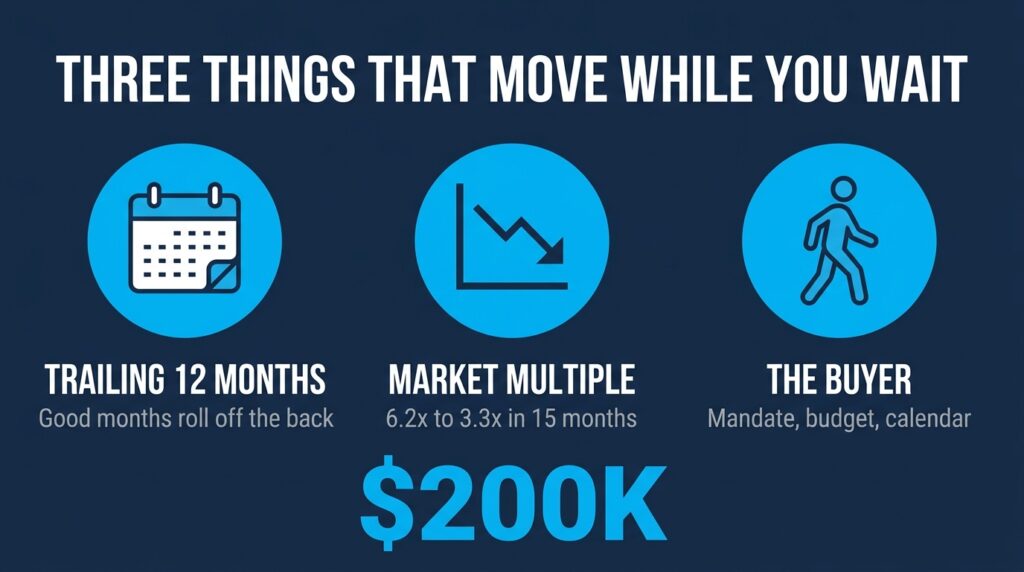
Three Things That Move While You Wait
Deciding when to sell your app is really a decision about waiting, and waiting feels free. It is not. Three separate variables move against you at the same time, and only one of them is under your control.
Your trailing twelve months. Buyers price on the last 12 months of profit, not on your best month. Every month you wait, a good month rolls off the back and a new month rolls on. One soft quarter does not just reduce your profit, it resets the number every offer is calculated from.
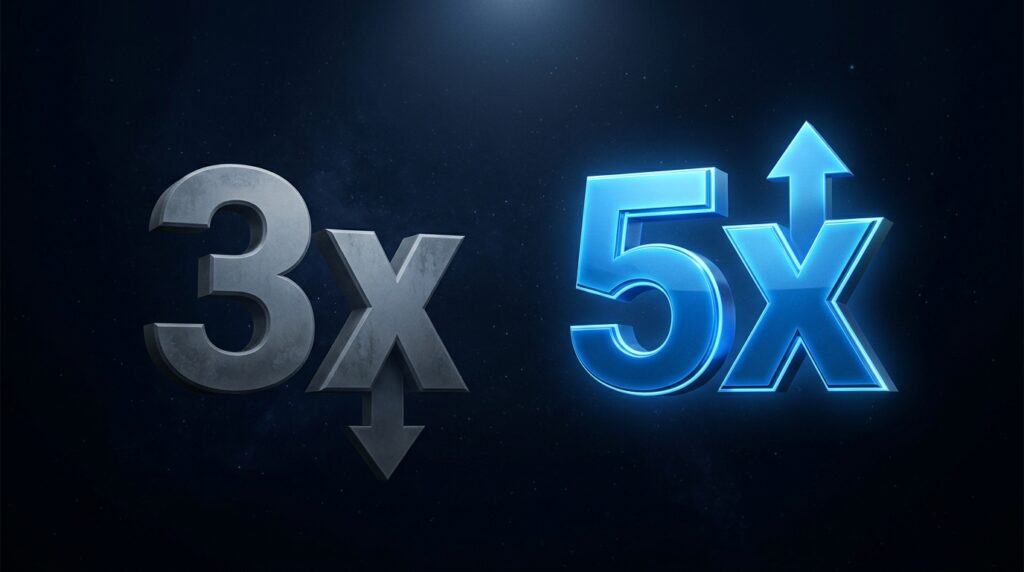
The market multiple. This is the one founders never model. Median enterprise SaaS traded at 6.2x trailing revenue at the end of 2024, 4.9x at the end of 2025, and 3.3x by the first quarter of 2026. The multiple nearly halved in fifteen months while the underlying businesses got more profitable. Nothing you do inside your app protects you from that.
The buyer who actually wanted it. Buyers do not sit still. They have a mandate, a budget, and a calendar. Roughly 24,000 deals were announced globally in the first half of 2026, about 9% fewer than the year before, with capital concentrating into fewer targets. When a buyer with a live mandate and cash allocated makes you an offer, you are not being offered a price. You are being offered a specific person, at a specific moment, with money already set aside.
That person moves on. The next one prices your app off a worse trailing twelve and a lower multiple.
When to Sell Your App: Three Signals That Say Now
Forget the calendar. There is no season for this. The answer to when to sell your app comes down to three signals, and none of them are on a date.
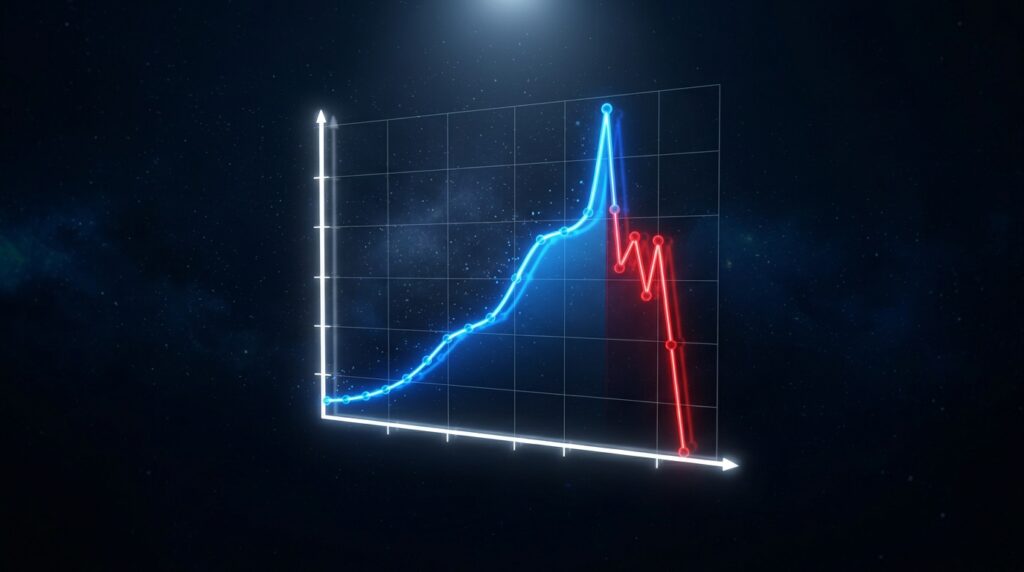
Your trailing twelve is the best it has ever looked. Not your best month, your best rolling year. Buyers pay for the shape of the curve, not the peak of it. If the line is pointing up and the last twelve months are your strongest, you are at the top of your own chart.
You have stopped shipping. Be honest about this one. If you have not shipped a meaningful update in four months, your attention has already left. The numbers will follow, they just have not caught up yet. Selling from quiet strength beats selling from visible decline.
A named buyer with a mandate is already asking. Inbound interest from a real acquirer is a market signal, not flattery. It means someone with capital has looked at your category and decided now is the time. If one buyer sees it, others do too, and that is exactly when competing offers are possible.
What the $200k Actually Cost
The founder who turned down $600k did not lose $200k because he was greedy. He lost it because he bet on two variables at once and needed both to break his way.
He needed his own numbers to improve, and he needed the market to hold. His numbers softened slightly. The market softened at the same time. Multiply a lower profit base by a lower multiple and a third of the price disappears without anything dramatic happening.
That is the part founders miss. You do not need a disaster to lose $200k. You need two ordinary things to drift in the same direction for eight weeks. Anyone asking when to sell your app should be asking that question against both variables, not just their own roadmap.
The same pattern shows up in the story of the founder whose mobile app retention metrics eroded his valuation before the deal ever reached diligence. Slow drift, sudden repricing.
How to Protect Your Exit Window
You cannot control the market multiple. You can control everything that determines how fast you can move when the window is open.
Keep 24 months of clean monthly P&L. Not a spreadsheet you build the week a buyer asks. Buyers who can verify your numbers in days pay more than buyers who spend six weeks reconstructing them.
Know your number before you need it. Get a data-backed valuation while you are not selling. The worst time to learn what your app is worth is the moment someone offers you money for it. Our guide on how to calculate what your app is worth walks through the arithmetic.
Run a process, not a conversation. One buyer is a negotiation you lose. Three buyers is an auction. We have seen two buyers offer $180k apart for the same app because they priced it against different models, and the only way to find that out is to have both in the room.
Use escrow for the money. Never take funds directly. A neutral third party like escrow.com holds the payment until the transfer conditions are met, which protects both sides.
Do not negotiate alone. The founder who took $400k negotiated by himself against a buyer who had done this fifty times. That asymmetry has a price, and it shows up in the final number.
The Window Is Open Until It Is Not
The honest answer to when to sell your app is this: when your trailing twelve is strongest and a motivated buyer is already at the table. That is usually the best offer you will ever see. Waiting is a bet, and it is a bet on factors you do not control.
If you want to know where your app actually stands right now, before you have to decide anything, that is what we do. Get a real, data-backed valuation and find out what the market will pay today.